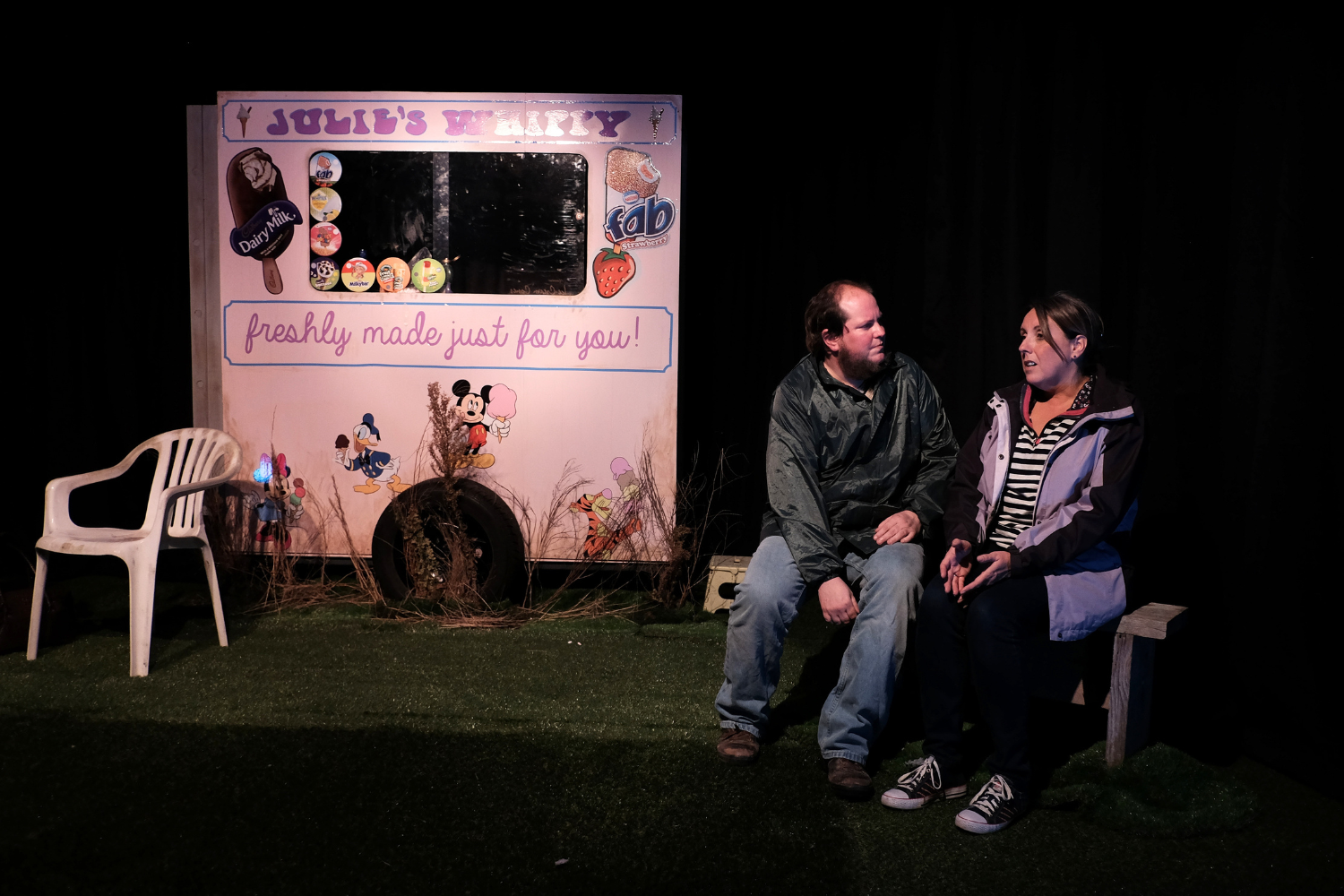
One of the notes I find myself giving actors is ironically:
"Stop acting."
That probably sounds like a strange thing for a director to say.
But in intimate theatre, it's one of the most important lessons an actor can learn.
At both The Lamb Theatre in Eastbourne and the Harvey Warehouse Fringe Theatre in Lewes, our audiences are only a few feet away from the stage. With fewer than 50 seats, there is no distance between the performers and the audience. The front row isn't somewhere out in the darkness. It's right there.
The audience can hear you take a breath.
They can see a thought forming before you've spoken.
They can tell the difference between a genuine reaction and one that's being pushed a little too hard.
In a space like that, there is nowhere to hide.
The irony is that the smaller the theatre, the less an actor often needs to do. The audience doesn't need every emotion signposted for them. A pause can say more than a speech. A glance can reveal more than a dramatic gesture.
That's what makes intimate theatre so powerful.
My heart has always been in producing small-scale, intimate theatre. Not because it's easier — in many ways it's far more demanding — but because of the connection it creates between audience and actor.
In venues like The Lamb Theatre and the Harvey Warehouse Fringe Theatre, the audience doesn't feel removed from the action. They're in the same room as the actors. They share the same silences, the same moments of tension, the same laughter and, occasionally, the same tears.
For me, that's where theatre is at its most powerful.
As a director, I'm often encouraging actors to trust that. Trust the writing, trust the moment and trust the audience. If something is truthful, people will see it. If it isn't, they'll see that too.
The relationship between actor and audience is completely different in a small venue. You're not performing at people from a distance. You're sharing a room with them.
That changes the experience for everyone.
As actors, we can feel when an audience is completely engaged. We know when a joke lands. We know when a room falls silent because everyone is absorbed in the same moment. No two audiences are ever quite the same, which means no two performances are ever quite the same either.
Perhaps that's why people often talk differently about intimate theatre once they've experienced it.
After a recent performance of Two at the Harvey Warehouse Fringe Theatre, one audience member left a Google review that said:
"One of the most brilliant and moving experiences in my 40 years of theatre-going."
Of course, every audience member brings their own perspective, but comments like that capture something that is difficult to explain until you've experienced it for yourself.
In a world where so much entertainment is consumed through screens, there is something special about sharing a story live with fewer than fifty people in the room.
For a couple of hours, audience and actors occupy the same space, sharing the same experience.
And when it works, there's nothing quite like it.